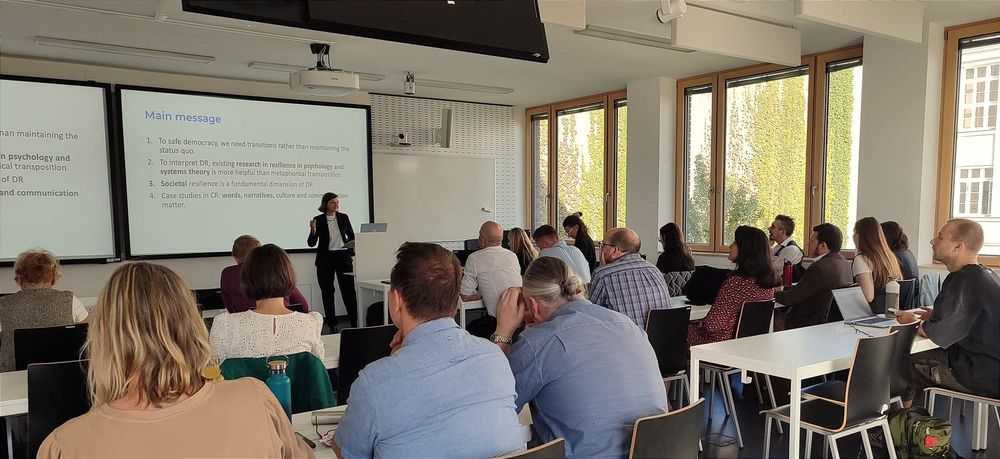


Communicating democratic resilience contains a core paradox: democratic states must mobilise citizens’ willingness to defend democracy while simultaneously upholding its values, even amid geopolitical conflict. Although wars are rarely democratic, democratic states justify defence by reinforcing commitment to democratic principles. Communication therefore must not only inform but also affirm why democracy is worth defending, fostering confidence, agency, and solidarity. Today’s chaotic digital environment intensifies this challenge. Post-truth dynamics, disinformation, foreign interference, polarisation, and attacks on credible institutions strain the trust citizens and democracies depend on. Many individuals feel unable to navigate competing claims, and this uncertainty breeds resignation, making societies more susceptible to manipulation. Traditional top-down communication remains necessary, yet mass messaging often misses people’s lived realities. Resilience cannot simply be delivered from above; it must grow through voluntary, community-based engagement. Promising initiatives exist, such as the EU preparedness union strategy and the European Centre for Democratic Resilience. But we also need strong European efforts that centrally include the communication dimension – because democratic resilience extends far beyond crisis rhetoric, source criticism, or disinformation response.